Welcome to Credit Withdrawal, if you like what you see, you may want to subscribe to my RSS feed. Thanks for visiting!
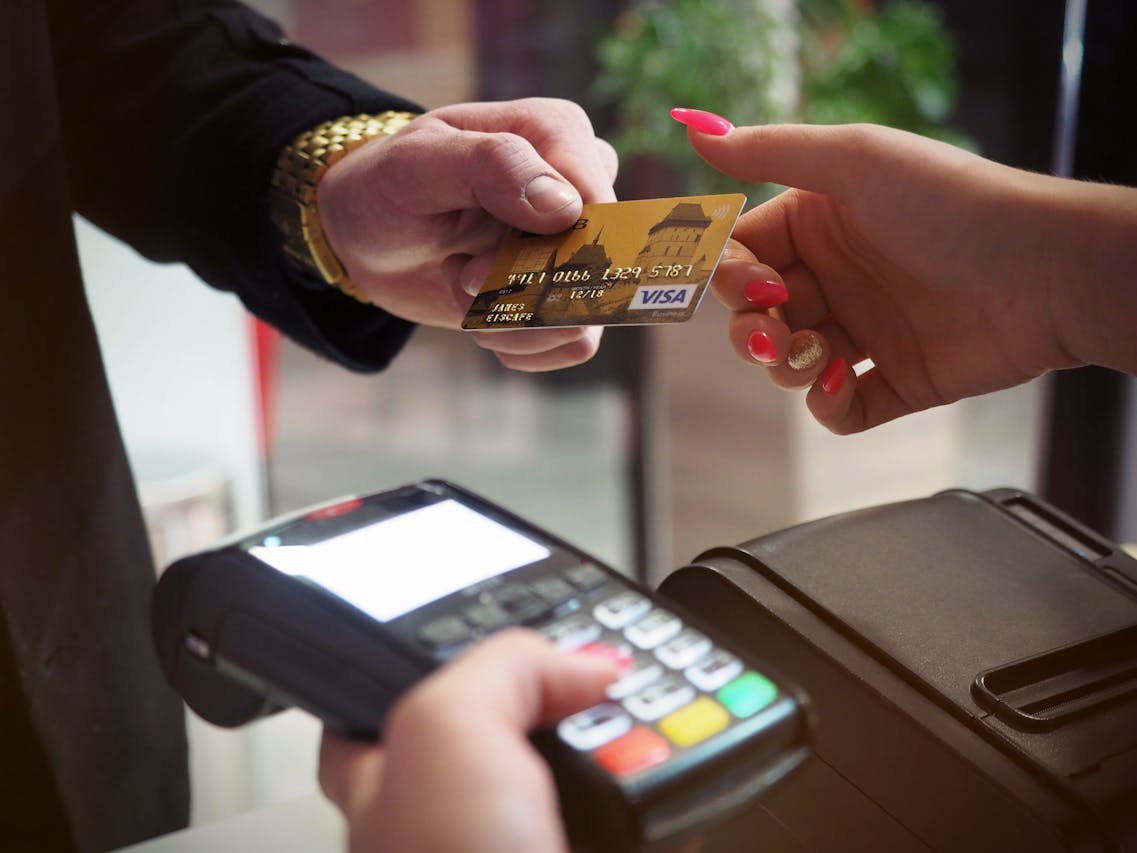
In a fit of desperation and mind-boggling strangeness, I received an e-mail offer from Capital One the other day to open a debit card with them. This doesn't sound that unusual, since virtually every bank account in the world nowadays comes with a connected debit card.
The weirdness begins when you start reading the details about the card itself.
No need to change banks or open a new checking account
You can enjoy all the great benefits of the Capital One Debit Card without ever having to change banks or open a new checking account. The Capital One Debit Card links to your existing checking account, similar to electronic payments for your mortgage, car loan, or gym membership. We will automatically deduct your debit card transactions from your existing bank account, wherever you currently bank.
From the Capital One website
So now, I don't have to open an account with them, I can just get a card that magically pulls money from another bank as if it were connected to that bank.
So Impressed, I'm at a Loss for Words
I'm not quite sure how Capital One actually came up with this, or how they're able to get away with it. They charge $19.95/month for this 'service', when the debit card you usually get from your bank is free. You do get points for using this card, but you'd have to rack up quite a few sales to counteract the $239.40 annual cost of this card. *
Also, they offer to track your spending, thus you have to reconcile an extra card against your bank account now too. Yay!
Oh the Wonders of this Device
This card works almost exactly like your existing bank's debit card. (Well, actually it works EXACTLY like your debit card to be precise, except your bank debit card probably doesn't come with a fee). It's recommended that it be attached to a checking account also, as the savings account and/or money market accounts will probably have usage limitations (preventing Capital One from withdrawing money more than a few times per month) .
They also mention that other banks might impose fees for this service from their end. I can't imagine why?!?? Another bank attaches a debit card to their accounts, charges their customers $19.95/month year for the same service they're giving away for free and they don't get a piece of the action!! No problems there.
Competition Must be Fierce
While this is arguably the most interesting offer I've seen recently, I can't for the life of me come up with a decent excuse for actually using this service. If I'm banking with a bank nowadays that doesn't offer debit cards, I'm probably also limited to live-teller service and hand-stamped bank books at that bank too. Maybe someday my neo-Luddite bank will come into the 21st century, or maybe I could just switch banks to one that actually gives out free debit cards.
Sorry Capital One, no sale here.
Can you figure out a circumstance where this card would be useful? I'd LOVE to hear about it. Leave us a comment today!
* It was pointed out that the $19.95 is an ANNUAL fee, not a monthly fee. Thanks to Mrs. Micah for the correction
We hope you liked the article, Subscribe to the Feed and get our articles every day!
If you liked this post Please help me out by sharing it!
These icons link to social bookmarking sites where readers can share and discover new web pages.
Last Friday after the market close, IndyMac reported that it was in serious financial trouble. By Monday, the Federal Depositor Insurance Corporation (FDIC) had stepped in and taken over the bank. People had started lining up to withdraw their savings, similar to the bank runs of the Great Depression.
Was their money there?? Of course. The FDIC has been around since 1933, with the sole purpose of guaranteeing the money of depositors is safe in times of bank uncertainty. This is just the first HIGHLY VISIBLE takeover of a bank since the Savings and Loan crisis of the 1980's, so people are nervous.
Look, Up in the Sky, It's a Bird! It's a Plane! It's a Frog!. A Frog?!??
The FDIC steps in and assumes control of banks that are on the edge of serious trouble (and serious trouble is defined as not having enough operating capital to continue to operate as a bank) and guarantees the money is there, up to $100.000 per depositor.
It acts as an insurance company, that pays out to depositors so they don't lose their deposits. This recent IndyMac default is estimated to eventually cost the FDIC between $4 Billion and 8 billion dollars to cover all affected depositors.
So why is there still a run on the bank this week?? The FDIC only insures up to $100,000 per depositor. If you have more than that, you might have some issues. Currently the FDIC is allowing people to withdraw the full $100k PLUS 50% of any funds above that amount in their accounts. There is still money at risk, but at least most of the money is being covered. Eventually, it is been said that all the funds are likely to be available, but that might be a while as the FDIC re-organizes the bank.
Here I Come to Save The Day!
The limits on covered deposits isn't just the $100k that is commonly known though. Depending on the type of deposit, and the number of depositors in the family it can be quite a bit more.
There are four account types that have deposit insurance on them.
Single Accounts - This is the standard type that everyone hears about. A single depositor in the bank can have up to $100k of funds that are covered completely by FDIC.
Retirement Accounts - This includes, IRAs, SEP-IRAs, and other types of retirement accounts held at the bank. The sum of all these accounts is protected by the FDIC, up to a total of $250,000 in addition to the coverages of other account types.
Joint Accounts - For accounts with multiple people on the account each person has a claim to $100,000 of coverage for the money in the account.
Revocable Trust Accounts - Trust accounts such as Payable-On-Death or Living Trusts also have insurance, based on the beneficiaries on the trust. That means if Grandpa sets up a Living Trust for the grandkids, and he has 5 grandchildren, the account is protected up to $500,000.*
*Other requirements exist. For exact requirements, consult a financial professional for your specific situation.
A Typical Scenario
Let's say that Joe and Jane Sixpack have been really saavy with their savings. They each have an individual bank account with $100k, a Joint account with $200k, each has an IRA with $250k, and they have set up a Living Trust for their 5 grandchildren with $500k in it.
They are completely safe, even though they have $1.4 Million in savings!
| Joe Sixpack | Jane Sixpack |
| Individual Account Coverage | $100,000 | $100,000 |
| Joint Account Coverage ($200,00 in account) | $100,000 | $100,000 |
| Retirement Funds | $250,000 | $250,000 |
| Total Individual Coverage | $450,000 | $450,000 |
| | |
| Living Trust (5 Grandchildren, $500,000 in account) | $100,000 per child | $500,000 total coverage |
| | |
| Grand Total of Coverage | $1,400,000 | |
So if you're still worried about the bank, and the money in it. Maybe it would be better to spread it out a little more widely, and you can sleep easier.
Do the current banking defaults have you worried? Leave us a comment why!
We hope you liked the article, Subscribe to the Feed and get our articles every day!
If you liked this post Please help me out by sharing it!
These icons link to social bookmarking sites where readers can share and discover new web pages.
Mrs. Micah was nice enough to tag me with a meme recently. "Find one step you can take to make your financial system better or more organized." So I thought about it for a while.
The first step I ever took towards getting my finances under control really had nothing to do with organizing the finances themselves. I started getting interested in information about financial matters themselves.
Knowledge is Power
Before I started a budget, got onto the debt snowball, or did any of the other things I've been doing to get my finances on the straight and narrow, I started reading about personal finance.
Lots of financial web sites exist around the Internet, all with differing advice on 'how to save', or 'how to do a debt snowball' or a whole myriad of other 'how to' finances. It seems like everyone has a differing opinion on what it takes to manage money.
Big surprise there.
If managing your money were easy, no one would be in debt except those that intended to be in debt. As it is, it's a subject that isn't taught in schools (or not sufficiently taught anyway). I can remember learning more about how a corporation is set up, how stocks and bonds work, and how the stock market operates, than on how to balance a checkbook, or how to shop for a major appliance without getting ripped off. The old school teaching didn't take into account the emerging culture of 'Buy it Now' mentality that was being promoted through the '80s and '90s.
So when I decided to turn things around, I had to re-learn how to handle finances.
Knowing is Half the Battle. (The Other Half is Doing, and the Third Half is Being Persistent)
Reading a number of sites gave me a good view on a common thread, expressed through comments, differing opinions, and straight-out contradictory blog posts.
You need to CONSCIOUSLY control your money!
It came back again and again to that point. Setting up the budget; Control where the money goes. Create a debt snowball; Control where the money goes. Eliminate credit card debt; CONTROL WHERE THE MONEY GOES.
Over and over again, this common denominator resonated out of all the messages I read. So, once I understood the TRUE requirement for managing my finances, I set out to do just that. Control them!
The First Step (of Many)
It's true, if you don't know where you're at, you'll never know where you're going. My first step was to assess my finances in a realistic way. Get ALL the bills, assets, loans, bank account statements, and so-on, and figure out exactly what money I had, when it was coming in, and where it was going.
It was quite the sobering experience. I found that as much as I was making (and I thought I was making GOOD money at the time) I was spending 5% more each month than was coming in. Five percent doesn't sound like much. It's like a small hole in a big ship. But even a small hole can eventually sink a mighty ocean liner if it isn't addressed. So, once I realized what shape I was in, I made some minor changes to my spending habits right off to eliminate that 5%, while I got a better handle on the big picture.
Having 'shut off' the leak, I had more time to really go through the finances and get things fixed.
Take YOUR First Step
Even if you're nervous about finances, or don't know a THING about managing money, the problem is going to continue until you grab the bull by the horns and confront the issue. Taking a small first step is better than taking no step at all.
I challenge all you readers to take one step towards getting better control of your finances. Do a self-audit, set up a budget, open a retirement account, do SOMETHING now, rather than waiting for the future to 'magically' take care of itself. Odds are, it isn't.
Time to Tag others!!
I'm going to tag Green Panda Treehouse, Prime Time Money, and My Dollar Plan next, and I encourage all the readers to write in with YOUR steps toward a better financial future.
We hope you liked the article, Subscribe to the Feed and get our articles every day!
If you liked this post Please help me out by sharing it!
These icons link to social bookmarking sites where readers can share and discover new web pages.
Bill Gates retired recently and stepped down from any role at Microsoft to work at his Bill and Melinda Gates Foundation, giving money away to charities.
Whether or not you like the man (or Microsoft as a company) you have to admit, that he's won. When I mean won, I mean WON. He's been the richest man in the world, and has more accumulated wealth than many small countries. He can go anywhere, do anything, and buy ANYTHING he truly wants. And what does he want to do?
Give it away.
The VAST majority of us will never have the opportunity to do many of the things that Bill Gates has done, and he's just getting started.
You've Come a Long Way Baby!
In a SINGLE lifetime, Bill Gates has built up a company that employs over 89,000 employees across the planet. He's minted more millionaires, and BILLIONAIRES through employee stock options and benefits than any other company in history.
He's taken a tiny software company and turned it into a multi-billion dollar powerhouse that produced the de-facto standard operating system for nearly every personal computer on the planet.
Small businesses start up, dreaming of getting big enough to be noticed (and bought out) by Microsoft.
Why Leave Now?
So why is Bill leaving the mothership to pursue 'other opportunities'? Because he CAN!
Most people stay with jobs they dislike to provide for their families. Having nearly unlimited resources guarantees that you never have to work at a job you don't enjoy. If you don't like what you're doing, you have the ability to leave, look around, and find something you do enjoy, and do that instead.
Bill has conquered the business world AND the technical world so far, so what reason does he have to stick around and guide the Borg-cube? Steve Ballmer is at the reigns of the company doing a more-than-adequate job of guiding the software giant into the future. It has probably become more task than treat to be the lead at Microsoft in recent years. So you know, when the rich get bored, they go do something interesting.
The Future's So Bright, I've Gotta Wear Shades
Bill has joined his wife to work full time on his philanthropic pursuits; The Bill and Melinda Gates foundation.
This foundation, endowed already with some $50+ BILLION (yes, billion, with a capital B) is aiming to make the entire planet a better place.
Some of their current initiatives;
Solving any ONE of these issues/problems would greatly change the world, Bill and Melinda are shooting for all of these.
Do YOUR Part
Joe Average out on the street will never be able to effect this much change in the world. But there are things you can do to help make changes. Getting your own finances in order and taking self-control is the very first step. If you're not a burden, you have the opportunity to begin to help society.
Money is power, and having money is having the power to make positive changes. As you grow your wealth, you move from a powerless state to a powerful one. Opportunities to effect change will present themselves as you move along the wealth building trail. Contributing to civic activities, your church, schools, or other charities is a good way to allow the individual to make the world a better place.
Shouldn't you be out doing something positive with your life?!??
Have ideas how individuals can make the world a better place?? Share them with us via comments.
We hope you liked the article, Subscribe to the Feed and get our articles every day!
If you liked this post Please help me out by sharing it!
These icons link to social bookmarking sites where readers can share and discover new web pages.
While going out to brunch this last weekend, I noticed something. I could sit down.
That doesn't seem like much, but we go to a pretty popular restaurant for our Sunday brunches. It's a semi-middle class buffet with really good food. The odd thing is that it's usually packed to the gills during Sunday. There's the early risers, that come in for breakfast, the crowd we come in with that 'time it' to get a little breakfast and lunch (come in just before shift-over) and the churchgoers that come in after church. Between all of these groups, the place is usually pretty jumping.
Where are All the Hungry Masses?
Not so this last weekend. The place was fairly deserted. There wasn't any activities going on in town like fairs or carnivals that I knew of, and still the place was almost empty.
Then I started thinking back a little bit and realized that there were a number of places I had been noticing lately with less crowds. For the Fourth of July, the crowds that had come out to see the fireworks were less than half what they used to be. Additionally, most of the first-run movies I had been to in the last few months hadn't been NEARLY as packed as they used to be (Except for Wall-E, which BTW was Great!). I don't know if this has to do with the quality of the movies or not, as a lot of them were pretty good.
Have YOU Seen My Customers?
I started talking about it with some co-workers, and they mentioned that they too had noticed a decided drop in attendance at a lot of different stores and events. The local permanent amusement park, Worlds of Fun (think Six Flags) has had a couple of years of low attendance, and this year in particular looks to be turning out to be particularly deserted.
Baseball games seem to attract a lot less people nowadays, as I can see how many seats are filled from the highway as I drive past (ether because of the economy, or because the home team just sucks this year, take your pick).
Even a lot of shopping malls and big box stores seem to have a lot less customers roaming around them nowadays.
Think it's the Economy?
It seems (to me anyway) that a number of factors are making the middle class masses stay at home much more nowadays.
- High Gas Prices - Make traveling and going out more expensive
- Higher Food Prices - Increasing restaurant costs
- Job Losses - People that get laid off or are worried about being laid off usually save as much as possible in anticipation.
- Bad Economy - Hearing almost incessantly about how bad things are, also triggers the saving gland.
- Never-Ending War - Our economy having a huge amount of money siphoned off to fund the war in Iraq (not political, just a fact).
- Uncertain Presidency - it seems to be shaping up to a very interesting race. One which if one side wins, will probably greatly benefit the middle class, and if the other side should win, will benefit big business and the upper income earners. A true class contest in the making.
- Credit Crunch - Credit card companies are pulling back the 'easy credit' and it's starting to affect consumers via higher interest rates and credit refusals. No easy money means less spending on non-essentials
All of these add up to an environment that scares the bejeezus out of a lot of families that have been just barely making it.
Perception is Reality
Even with the stimulus checks, which did have a minor effect this last month (largest percentage increase of spending in decades), it doesn't provide long-term confidence in our economy. Add to that the torrent of news showing that 'things are bad' and it starts to become a self-fulfilling prophecy.
Things are rocky, I'll admit, but the U.S. economy has already weathered things that would have devastated some lesser countries. We've been hit by a recession (don't mince words, that's what it is) the housing bubble, high gas prices, and skyrocketing prices in consumer goods. This is also the first time in years that the Fed has seriously had to worry about inflation.
But even with all that, we're only in a minor slowdown. That might last quite awhile, but it's not the Great Depression all over again. Even though things sound bad, they could be much worse. We're actually doing pretty good, all things considered;
- The Housing Bubble is slowly correcting itself . People are still losing their houses, but many have already realized that they overextended themselves and have been preparing for eventualities as much as possible. It's not such a surprise when they can't pay for the increase in the ARM.
- The Unemployment rate is still somewhat high (hitting 5.5% last month) but still not nearly as bad as it was during the last Dot Com bubble burst. People are having harder times finding jobs, but the government is working to extend unemployment an additional 13-26 weeks as an aid.
- People are working on finding different ways to save money on gas prices. Companies and even government agencies are encouraging people to telecommute more and/or work compressed schedules. The stigma of working from home is overshadowed by the threat of losing a good employee because commuting costs force them to re-assess their jobs. Additionally, as a side note, this is also causing some re-vitalization of some urban areas, as people move closer to their jobs. Some areas are actually experiencing homes sales increases because of this.
So maybe things only look bad for the moment. It could be a lot worse than it is.
Do you think things are getting better or getting worse? Leave us a comment and let us know!
We hope you liked the article, Subscribe to the Feed and get our articles every day!
If you liked this post Please help me out by sharing it!
These icons link to social bookmarking sites where readers can share and discover new web pages.